The UKRN process (part 3 of 3)

After posting entries about what I experienced during my UKRN application from taking the IELTS for UKVI to sitting the Computer Based Test (CBT), it took me a while before I was able to finally organize my thoughts about what truly happened during my OSCE (Objective Structured Clinical Examination). Laziness aside, I think I might’ve just slipped through repression as a defense mechanism after it all. LOL.

It was in April of 2018 when I first came to the UK, with only 37kg of what I could fit of my life into my luggage, armed with big hopes and dreams. As redefining as it was, I still quite vividly remember how it was also a bunch of blurry, uncertain moments that just had me jump from one experience to the other, not entirely knowing what I was doing. All I knew then was that after all of the initial triumph that I felt after acing the IELTS and the CBT, I could feel that my struggles were far from over.

A few months prior..

After passing the CBT, I was given instructions regarding all of the paperwork that I needed to complete. Disorganized as I am as a person, I actually do like administrative stuff. Paperwork is totally my jam. There’s just something about the sense of collection, completion, and organization of documents that I find weirdly satisfying. The guide with the downloadable forms that the NMC (Nursing and Midwifery Council) will send you after passing the CBT is pretty detailed anyway, so it’s relatively easy to follow. Just make sure (and this is very important, from what I’ve gathered from reliable sources) that your documents are as official as possible, as it will be inspected by the NMC, which is the nursing and midwifery sector of the UK government. This generally means that everything has to be on letterhead paper, with official seal and signature, neatly folded inside a letterhead envelope, the works. Then it has to be sealed, signed (by the assigned signatory of the institution where the document is coming from) over the sealed flap, and then taped shut.

It sounds like a lot of work, but try not to panic and just do one thing at a time, and you’ll eventually get there. Once you have everything you need, you’ll have to send them to the NMC office in the UK (except for your PRC certificate, which you’ll have to pay for at the PRC office and they’ll send it directly to NMC themselves). For added peace of mind, I would suggest sending your documents via a trusted international courier that offers tracking services, as not only is it much faster, you’d also have proof that the NMC received your documents.  

After all of this frustrating business, on comes the most painstaking among the requirements, which is having to wait for your decision letter (DL) from the NMC one to two months after sending all these forms in. According to the NMC, they “aim to assess applications within 60 calendar days of receiving all your supporting evidence.” The timeline greatly varies, though, as some may encounter problems with their documents, but once your paperwork is complete, agencies usually don’t have to wait for a decision letter before they can send you here. Some of those from my batch didn’t have a DL, and we all received a letter of sponsorship from our UK employer.

Back to business..

The OSCE is the second and final test of competence for internationally-trained nurses and midwives, the first being the CBT (my blog post about the latter can be found here). Note that “international” here means coming from outside EU (European Union) countries. It’s a practical exam wherein the candidates are tasked to execute common, but specific, nursing procedures under time pressure (15 minutes or less for each station) and while being closely observed by an invigilator.

The OSCE may only be taken in one of the three testing centers in the UK: Oxford Brookes University in Swindon, University of Northampton in Northampton, and Ulster University in Northern Ireland. I have enumerated them in order of the average passing rates from lowest to highest. I took mine at the University of Northampton together with my other friends who were scheduled to take it on the same day. We rented an Airbnb place for the night before our exams to make sure that we arrive early, and it was a lot of fun, if not for the gloomy dark cloud (a.k.a. OSCE) hanging over us the entire time haha.

So basically, the OSCE involves performing simulated patient scenarios and is grouped into two parts: APIE (assessment, planning, implementation, and evaluation), and two nursing skills (there’s a specific list of skills that you need to master for this bit). All of these account to six (6) stations, all of which you need to pass in order to get your NMC PIN. What you will be doing for the nursing skills part is only revealed during the exam itself, so you need to be able to perform each one confidently because you’ll never know what they’ll have you do until you’re already at the station. Also, note that any form of communication with other candidates count as a form of cheating, and mobile phones are not allowed throughout your exam.

I would love to go into detail about the stations, but seeing as how I signed a legal document forbidding me to do so, I’m afraid that I can’t. Anyway, don’t worry because I’m absolutely certain that you will be sufficiently briefed about all this by your new hire trainers upon arrival to the UK.

How much does taking the OSCE cost?

Before July 16, 2018, failing any part of each of the two sets meant having to retake the entire set, but the NMC made revisions to this rule and you will now be required to re-sit only the part of the set/s in which you failed. If this happens, this would also mean that you will be paying for your retake out of pocket, which is either for the full (£992) or partial (£496) cost of the exam. Your initial shot at the OSCE (£794) is usually paid for by your employer, and you are only allowed to take the OSCE three times. If you fail on the third attempt, the NMC will close your application, and you would need to go through the process again (i.e. find another employer to sponsor your application).

Countless times, our OSCE instructors have reminded us that these procedures are tasks that we’ve performed as nurses loads of times, so we should know what to do already. Looking back, I have to agree. The only thing is that during our shifts, apart from anxious relatives breathing down our necks every now and then, there weren’t examiners watching and grading your every move. And you know how oddly conscious you become of every single thing when you know that you’re being scrutinized, right? It’s like as if the pressure goes up to your ears and then covers your brain with a blanket and it suddenly stops working. Scary? Yes, it was absolutely terrifying, with the Hawthorne effect and all that. It was so daunting that upon seeing my friends after I sat my exams, I immediately burst into tears, remembering all of my slip-ups and thinking of reasons why I was sure that they’d fail me.

Turns out they didn’t.

According to this guide authored by the NMC, applicants are informed of the result of the OSCE (full/partial pass or fail) within five working days after their scheduled exam. I took mine on a Thursday (July 12) and I received my results on the following Monday (July 16). I was anxiously checking my email every 15 minutes or so, when I suddenly saw the notification that I just received a new email. One glance at the word ‘congratulations’ was all it took for all my worries in the world to go away. I was in the highest spirits—I was so, soooo happy, but most of all, I was relieved. I was saving up for an electronic Yamaha keyboard and I really didn’t want to pay to re-sit the exams LOL.

Some people say that it’s “easier” to become a UKRN than a USRN because the NCLEX is difficult (and the waiting time is longer). Please keep in mind that this is highly subjective, and I think that it’s tough to even try and compare because their licensure processes are not at all alike. For the record, no, I have not tried taking the NCLEX yet, and I’m not sure if I even wanted to, but I did use NCLEX practice exams for the local board exams before. I have to agree that it wasn’t easy either, but at least it’s a bit like the CBT, wherein you just need to answer questions with nothing but your critical thinking skills to either hold you back or help you get that license. The OSCE is.. well, a completely different world from that, and one which I initially thought was a bit primitive. After taking it, however, I now think that requiring internationally-trained candidates to go through the OSCE does make a lot of sense.  

I started working as a pre-registered nurse here in the UK shortly upon arrival, and we had several paid study and practice days prior to our “big day.” The thing that ticked me off a little bit was that it was the Recruitment team who chose our OSCE dates for us, and they scheduled mine in mid-July. Remember that this was back in April, and I was worried sick and restless for almost three months before I was finally able to take the final test. If given the choice, I probably would’ve chosen late May or early June because I already felt a bit ready then. Stretching it out way too long just caused more undue pressure and stress. But as it is, I’m just glad that it’s finally over, because even after passing the OSCE after the first try, I would never want to take that exam again. EVER.

On fight, flight, and failing..

Of all the examinations I had to take before I got my NMC PIN, I’d have to say that the OSCE was by far the most unpleasant. Don’t get me wrong—I do think it’s absolutely necessary, as there certainly are variances between nursing practice here and everywhere else in the world, but I’m just going by the experience as a whole. The way it made me feel and all of the acne breakouts it caused were just plain horrible. But then again, the OSCE is designed to ensure that international nurses are able to practice safe and effective nursing care, so I’m all for it. Failing it, though, doesn’t mean that you’re not qualified, so don’t be too hard on yourself. Again, there are so many physical and psychological factors that would influence the way you perform the tasks (oh, there are going to be recording cameras for quality purposes btw) that it’s real easy to mess up. So if you fail, don’t fret. Just shrug it off, and go try again. Besides, at the end of the day, when you already have your PIN, people are not gonna ask how many times you tried. Not that it matters, anyway. 🙂

The UKRN process (part 2 of 3)

If you are a Philippine-registered nurse and would like to work in the UK, there are steps that you need to take in order for you to get your NMC PIN and gain UK registration. First is to get the appropriate work experience, and second is to pass an English proficiency exam. I wrote about my experiences in taking the IELTS for UKVI on a previous post, which you can read here.

Alright, so you’ve taken the IELTS/OET, and met the score requirements. What comes next? Well, if you don’t have an agency yet, this would be the perfect time to ‘shop’ for one. Check out all of the perks that they offer, and then choose the best one for you. Prior to taking the IELTS for UKVI, I was already in contact with two agencies—one was recruiting for a hospital in Portsmouth, which is in the far southern coast of England, and the other one was hiring for Central London. After a careful consideration of my options, I went for the latter. Agencies usually take into account not only the length, but also the type of work experiences of the applicants. At the time, they were hiring nurses with backgrounds in emergency, intensive care, operating room, and medical-surgical nursing. This requirement changes from time to time, though, seeing as how UK hospitals hire international nurses based on where they’re currently lacking in staff.

For obvious reasons, agencies prefer qualified applicants who have either already taken the mandatory English tests, or booked to take it soon. If you didn’t meet the minimum ratings on the first try, don’t fret; you’re not the only one. As I’ve mentioned on part 1 of “The UKRN process,” many have failed before, but you can always try again. I’ve heard that the record number of tries in the IELTS exam for my agency was 14. Yep, FOURTEEN. So if you could just imagine if that person quit trying after the thirteenth try…

…back to the matter at hand—right after I was able to access my IELTS results online, I contacted my chosen agency to let them know of my scores. Afterwards, I went through my current employer’s hiring process—the drug calculation test, initial (panel) interview, then another panel interview which is more of a return demonstration of common nursing practices (I will explain about this further in part 3)—before they gave me the best news ever: I was hired.

Securing an employer is a very important step in the process—your employer will sponsor your Tier 2 Work Visa, guide you with the forthcoming exams that you need to take, as well as help you with your initial adjustment to life in the UK. So, after I was guaranteed an employer, I created an online account with the NMC (Nursing and Midwifery Council) under International Registration, where my agency paid for my application under adult (general) nursing (£140) and then I chose my schedule for taking the CBT (£90). By the way, here in the UK, nursing has four different fields of practice: Adult (general), children’s, learning disabilities, and mental health nursing. In order for you to work with a certain group of patients, you need to have the correct registration (i.e., you’re not allowed to work in a paediatric ward if you’re not licensed under children’s nursing, etc.). You can be registered under more than one field, but that would also mean that you have more than one registration to renew, pay, and revalidate for—sooooo, too costly and complicated (I found out about this because after I got my PIN, I e-mailed the NMC to inquire how I can also get a mental health nursing registration :D).

THE CBT

The Computer-Based Test (CBT) is the NMC’s first test of competence. The second one is the OSCE (Objective Structured Clinical Examination)—but more about that later. The CBT consists of 120 multiple choice questions, and you have up to four hours to answer them all. The complete guide can be found here.

In order to get a decision letter (most employers require this before they can grant sponsorship to come to the UK) from the NMC, you need to pass the CBT first. To be honest, four hours is waaaay more than enough time for you to answer all 120 questions—most of the people I know who have taken it, me included, barely had to use half of the allotted time. It sounds easy enough, but I would highly suggest that you do not take it lightly (I didn’t) because you can only take the CBT up to three times; after which, your application will automatically be rendered as void.

After procrastinating a little and choosing a satisfactorily lengthy review period for my CBT, I had it scheduled in December—just before Christmas. For the CBT, my preparation consisted of three things: reading NMC materials, reading tips from blogs, and panicking (LOL). I made sure that I read the Royal Marsden Manual of Clinical Nursing Procedures (the entire book, and I’m not even kidding), the NMC Code, NICE guidelines (all of these may be found online), as well as practice questions sent by my agency. I’ve read that other people found the exam pretty easy, and that there were no complicated pathophysiology and lab results questions, yada yada… but I had this weird feeling about it, so I didn’t take their advice. Having taken the CBT, my advice is that you shouldn’t believe them either.

Now, due to rules that I agreed to prior to sitting the CBT, I’m afraid I cannot give anything specific in terms of questions that came up during my exam; however, I believe that it is perfectly safe for me to tell you this: Read and re-read THE CODE. Know it by heart. I really can’t put any more emphasis to this—there are ‘critical’ questions during the CBT, and these are the questions that you NEED to answer correctly, or else you’d automatically fail. It will not indicate which questions are critical, so it’s kinda like the ‘Minesweeper,’ if you’re familiar with that game. Questions related to patient and public safety, as well as The Code are said to be a part of this set. In order to pass the CBT, you need to answer the critical questions correctly, and get at least 60% of all the answers right.

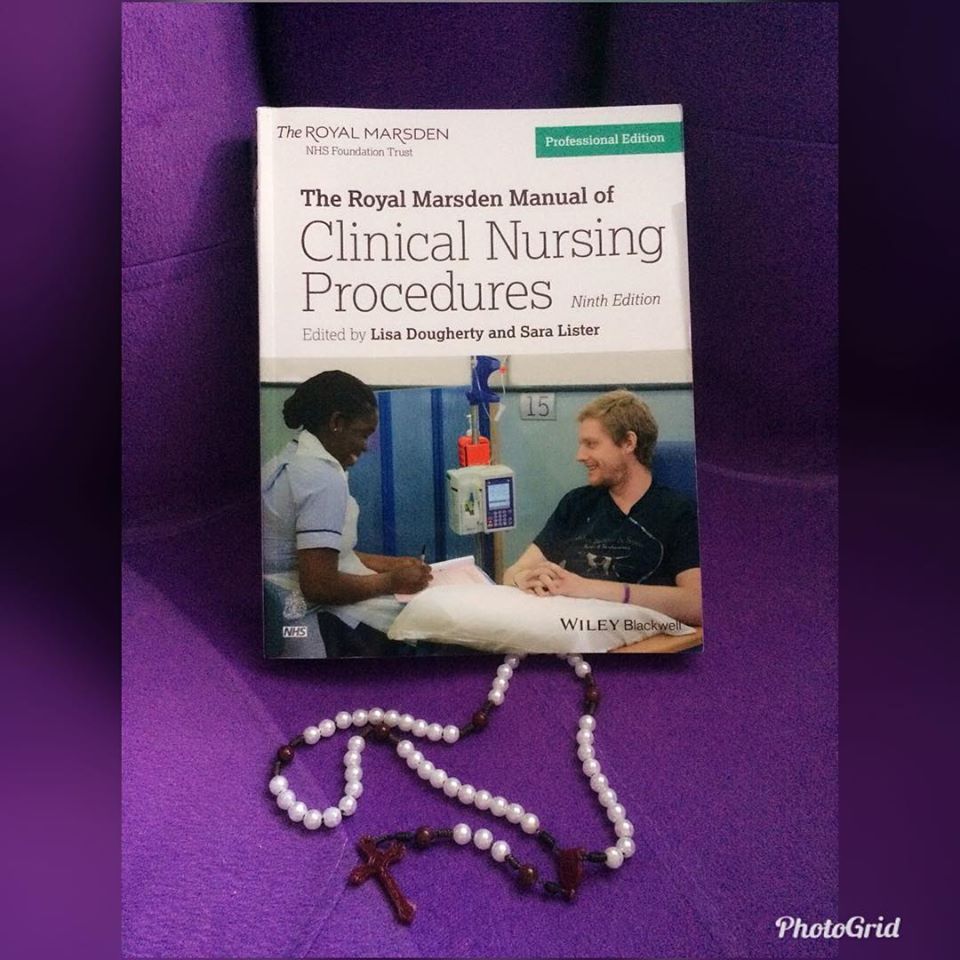
As I’ve mentioned before, I read the Royal Marsden Manual, since it’s the basis of nursing procedures in the UK. What I didn’t realize is that it would’ve been of more help to me during the OSCE, not the CBT. But still, it did help a lot since many of the questions I encountered were about nursing practice. There were a lot of questions similar to those NCLEX practice questions that they threw our way during our review for the local board exams as well, so having good recall would certainly help. I did get a pathophysiology question, a rather complicated one, and I can’t forget about it because it was about a case that we presented during college LOL so lucky me! I also reviewed about lab normal values even though some people said it wasn’t gonna come up.. well, my hunches were correct, because it did for me.

Within 48 hours after the exam, the NMC will be sending you an email to inform you whether you passed or failed. I took the CBT at a Pearson VUE center in Makati, and having read that others got their results right away, I literally ran back to the hotel after finishing and anxiously checked my email every five minutes or so. Sure enough, within the next hour after I took the exam, I received an email congratulating me for passing the first test of competence. Yay!

Needless to say, what followed was one of the most memorable Christmases ever—I’ve made my family proud, and I was proud, though a bit ambivalent. What I didn’t realize was that it was probably the last Christmas I’d be spending in the Philippines. UK hospitals don’t usually allow paid annual leaves to be scheduled during the holiday season, adding to the fact that plane ticket prices are sky high during then, so going home for Christmas and New Year celebrations would be an impossible feat. If you get homesick easily (can’t blame you, really), then that’s something you should seriously consider as well. Then again, it’s fairly easy to bring your family to the UK once you’re settled, so if you’re still bent on that UKRN dream, then go forth and don’t let my laments stop you. After all, your life is a ship, and you’re the captain. Ganbatte kudasai!

The UKRN process (part 1 of 3)

One of the reasons why I was so bent on starting a blog is that aside from wanting an excuse to write again, I also wanted to help other nurses in the Philippines who are looking into getting their UKRN registration. I know that there are so many others who have posted their own walkthroughs and I’m one of those who have found their guides to be extremely helpful. There are so many countries looking to hire international nurses, and the United Kingdom is one of them. The steps that I took were all pretty straightforward–I will go through each of them in as much detail as I can (obviously without breaking any rules whatsoever).

Now, bluntly, the UK’s requirements for internationally-registered nurses are quite extensive, and depending on how dedicated you are to your goal (and how much free time you have in your hands), this may lengthen the process. The very first step, though, is gaining work experience. The UK requires at least one year of paid work as a staff nurse, meaning, your work experience should be post-local registration. Also, it has to be recent (within the last six months). During my application, we were classified by the agency under the department where we worked–sometimes, employers can be very specific with the applicants’ work experience/s. My file was included in the “A&E” folder (A&E or Accidents & Emergencies is how they call the ER Department in UK hospitals), but don’t be fooled–it’s not always the same department where you worked that you will be put in when you get here.

When you already have the first requirement under your wing, the next step is to take your English proficiency test. For years, the IELTS (International English Language Testing System) exam had served as the pitfall of many. Fairly recently, though, the NMC (Nursing and Midwifery Council) started accepting OET (Occupational English Test) scores as well. Nevertheless, I went the old-fashioned way and took the IELTS exam, so I’m not really sure how to go about taking the OET. The IELTS has four tests: Speaking, Reading, Listening, and Writing, and you will be tested for each one of them. Now, this is the fairly confusing bit–the IELTS test also has two types: General Training and Academic, and both of them can either be for UKVI or not. To simplify, if you’re a nurse applying for registration, you’d need to take the Academic IELTS test, since it’s a pre-requisite for professional registration with the NMC. You can either take the “regular” Academic IELTS or the Academic IELTS for UKVI (UK Visas and Immigration) exam. Both are accepted by the NMC, but the difference is that even if you’re able to get through with the former, you would still need to take the latter for immigration purposes (UK Immigration only needs an overall band 4).

With this in mind, I decided that I wanted to ‘hit two birds with one stone’ and take the Academic IELTS for UKVI. Why do people choose one from the other, you ask? What I’ve gathered from my sources is that the regular IELTS is somewhat less strict than the UKVI counterpart, therefore it’d be ‘safer’ to take if only for NMC registration purposes. Also, there are a lot more sites where you can take the regular IELTS, unlike IELTS for UKVI (which you can only take either in Manila or in Cebu City). And it does make sense, too. If you’re not sure as to how you’d fare with the exam, it may be wiser to take the safest route and just pay for two.

In regard to signing up with a review center (or centre), it’s really up to you, but I guess it would help, especially if you desire a more thorough approach in getting you prepared for the exam. I, on the other hand, thought it was too expensive (which it is!) and opted for the free IELTS guide provided by the British Council when you set an exam date with them. Oh, and I re-read the entire Harry Potter series, but mainly for inspiration (LOL). I also did this trick that I got from another site, wherein on the day prior to your speaking test, everything you do has to be in English. On a regular day, most of our brains are wired to think in Filipino, and then we do the translating in our heads before coming up with an English response–this process takes a while and gives more room for errors. But if you hear, read, and speak nothing but English on the day before your speaking test, it would be easier for you to think of more natural responses to your invigilator’s questions.

The speaking test. I had an English gentleman as my invigilator for my speaking test. I took it a day before everything else, so needless to say, I was a bit tense. I’ve never taken this type of exam before–well, maybe we had exams like this in college, but back then, it was okay to joke around and poke fun at the others, and it wasn’t going to cost you thousands of pesos. Seriously, I had nothing but nasty thoughts running the entire time. How much was this test for again? What’s my mother gonna say? It’s not going to kill me if I fail, but.. Talk about the Hawthorne effect! They said we should sound normal like as if it were an everyday conversation, but I’m pretty sure I had a poker face on the entire time. During the first part, I was asked random, real life-based questions. The middle bit had me picking one among several topic cards (sort of like in beauty pageants or in extemporaneous speaking contests), for which I was given a few minutes to think about what I was gonna say before speaking. Afterwards, I was asked more detailed questions about everything I talked about. Looking back, they were actually pretty easy questions. However, knowing that you’re being judged on what you’re saying and how you speak can really have detrimental effects on your confidence, so you really have to relax OR ELSE.

All the written tests. After the first day, I couldn’t help but feel a bit pessimistic about the possible outcome of my exam. But then I kept reminding myself that there were three other tests, and that there’s no way for me to know how I did anyway, so I tried not to think about it. So, on the day of the three written exams, I noticed that there were a lot more people than during the speaking part. We nearly filled up the corridors, but the hall at the Crowne Plaza Galleria where British Council held the exams was enormous, so there was a lot of room. It kind of reminded me of the O.W.L. exams at Hogwarts. The listening test was quite simple–We listened to statements, and questions followed. You have to really pay attention, though, because they only play the passages twice, and sometimes, the choices can be awfully similar. The reading test was as direct as the listening test, but not easier. First off, the passages were looooong. I’m talking about clippings from editorials, that sort of thing. And second, there’s this naughty little presence called time pressure. The technique I used was skimming through the questions first, just to get the gist of what I was supposed to look for, and then reading the paragraphs.

Now, for the last part: the writing test. This one is still somewhat ambiguous to me, because the sample writings I’ve read were nowhere close to how simple they made it sound on the list of what they’re looking for. My preparation for the IELTS exam was for one month, but I only practiced for my writing test on the day before. It’s not because I was overly confident or anything like that, it’s just that I figured that if I stressed myself out with the differences between what I thought they’re looking for and what others had written up, I’d just end up more confused. So I just went with the general idea that: (1) the first sentence should ALWAYS answer the question, (2) the next few sentences should support your stand and give as much detail as you can without going overboard and including things that have nothing to do with the topic, which I have a tendency to do btw, (3) the last sentence should reinforce the first and give a strong ending, and lastly, (4) you have to meet the word count!

Okay, so you’re finished with your tests. The waiting game then comes next. You can view the results online 13 days after the last day of the exams, and they will also mail the Test Report Form to you. If you’re not satisfied with the results, you can contest it by applying for an enquiry, which you have to pay for. But even then, there’s no guarantee that your scores will change. There are loads of useful information online that should help immensely, and some of them are things that should be a given already, such as being at the testing center ahead of time, bringing all of the necessary documents, especially the ID you used for registering, etc. I remember on the last day of my exams, there was a lady who left her passport at home, and she lived a couple of hours away. What happened after, I can only hazard a guess.

Although there isn’t really a dress code for the exams, you should look presentable. A business casual attire should be fine during the speaking test, and anything decent should be alright for the written exams. You don’t have to bring your own pencils and erasers to the venue–they will be provided for you. That’s it for me, I guess. I hope that knowing what’s about to come will help you with your battle. Always remember, though, that it’s okay to fail, as long as you try again. It’s never the end until you say so.

My life as a ‘call girl’

It was during my high school years when the call center industry started thriving and the idea that I might want to work there started growing inside my head.

Okay, I’ve mentioned before about my not-so-brief stints in a few call center companies, and I just wanted to let it out that contrary to how I must’ve sounded in my previous post, I never once regretted being a part of the call center business. It was actually some of the best years of my life–heck, if not for it, I wouldn’t have had the chance to pay for my Master’s degree while working only part-time, and still getting to enjoy some of the finer things in life. So, no regrets at all. If anything, I really wouldn’t mind going back! Call centers in the Philippines offer decent salaries to people who don’t want to go hungry but don’t wanna leave the country either.

My first job fresh from college was as an outbound sales representative for a US telecommunications company. People said that I sounded sweet over the phone, and I wasn’t exactly the persuasive type.. sooo, that gig didn’t last very long. I actually found sales extremely stressful (which I find ironic that I had the audacity to even consider becoming a med rep a few years later, since the latter is more “hardcore” sales). I resigned after only less than a year, and moved to another company–this company, I have absolutely nothing negative to say about. I still think of it in hindsight as the absolute best company I’ve ever been in. Their screening process was very rigorous, and I was a very proud employee when I was there. It was customer service for a financial company in the US, and I believe I did quite well in that field–well, at least I’m sure I did better there than in sales.

For quite some time, I’ve thought about applying for a promotion, but I was too lazy to even start. It was my quarter life crisis that led to my decision to leave. I got in as a med rep for one of the biggest pharmaceutical companies in the Philippines, and my head got the better of me. But then you know what they say about true love, being what you always come back to eventually, no matter where life leads you? I got back in the call center game again, but this time, it’s for a different company. Now this one, though not perfect, has grown on me and left a bittersweet taste in my mouth. This was where I’ve gotten to know people who became important pieces in the puzzle I call ‘life.’ It’s still not very clear how and why I got burnt out, but I did. And I find that very sad.

Sometimes, I daydream about my call center days. For real. I mean, I know so many nursing grads in the call center industry who would love to shift back to nursing and ‘look for greener pastures’ in other countries. Well, been there, done that. And I can say that it does sound like a very promising dream, but as with everything, you’d have to think it through many times over. Why? Because there is nothing worse than having to do what you don’t like doing and being where you don’t want to be.

It’s not that I don’t like being a nurse. I actually do, and that makes it even more frustrating. I sometimes imagine having another body whom I can ask to stand in my place so that I can maybe just go back home without disappointing anyone. Honestly, it feels like I just had to complete my bucket list from my younger years, when I had nothing but imagination to make up for wanting to be where Harry Potter and his friends supposedly lived. And now that I’m here, I can say that Hogwarts isn’t real, but the magic is–we all just have to find out where it lurks.